Soldering, Bimetals and Fuses: Solder Materials, Bimetallic Strip and Fuse Wire
Ch. Devi Lal Government Polytechnic, Nathusari Chopta › Diploma in Engineering (Polytechnic) › Electrical Engineering › Semester 3
Soldering, Bimetals and Fuses: Solder Materials, Bimetallic Strip and Fuse Wire
Three small but very useful things are covered in this note. Solder joins wires and components. A bimetallic strip bends when heated and switches things on and off. A fuse melts and cuts the circuit when the current becomes dangerous.
A. SOLDERING AND SOLDER
1. What Is Soldering?
Definition: Soldering is the process of joining two metal parts by melting a filler metal called solder into the joint. The solder melts at a lower temperature than the metals being joined, so the parts themselves do not melt.
Soldering is used for joining wires, connecting components on circuit boards, and fixing cable lugs and terminals. It gives a joint with good electrical conductivity.
2. Solder Materials
Solder is an alloy of tin and lead. This has been asked as an MCQ in two papers.
| Solder | Composition | Melting range | Use |
|---|---|---|---|
| Tin-lead (about 60:40 or 63:37) | Tin and lead | About 183–190 °C | Electrical and electronic joints |
| Tin-lead (about 50:50) | Tin and lead | Higher range, about 183–215 °C | General soldering of sheet metal |
| Lead-free solder | Mainly tin with silver and copper | About 217–220 °C | Modern electronics (lead is harmful) |
Note: The compositions and melting points are approximate textbook values and are not given in the syllabus.
3. Properties of a Good Solder
- Low melting point, lower than the metals being joined, so the parts and nearby components are not damaged.
- Good wetting and flow: the molten solder should spread easily over the clean metal.
- Good adhesion: it should stick well and give a strong joint.
- Good electrical conductivity, so that the joint has low resistance.
- Adequate mechanical strength.
- Resistance to corrosion, so the joint lasts long.
- Quick setting from the liquid to solid, so the joint is not weakened by small movements. (The 63:37 tin-lead solder melts and freezes at a single temperature.)
4. Flux
Flux is a chemical paste or liquid, often inside the solder wire. It does three jobs:
- It removes the oxide film from the metal surface.
- It stops fresh oxide from forming while heating.
- It helps the molten solder to flow and stick.
Common fluxes: rosin (resin) flux is used for electrical work because it does not corrode. Acid fluxes such as zinc chloride are used for plumbing and sheet metal work, and they must not be used on electrical joints because they corrode.
5. Process of Soldering
- Clean the surfaces to be joined with a file or emery paper.
- Heat the soldering iron until it is hot enough.
- Apply flux on the joint (or use flux-cored solder).
- Heat the joint with the iron tip, not the solder.
- Touch the solder to the heated joint. It melts and flows into the joint.
- Remove the solder and then the iron. Keep the joint still until it cools and sets.
- Clean the extra flux, and check that the joint is smooth and shiny.
Important point: A dull, grainy joint is a "dry joint". It has high resistance and may fail.
Soft and hard solders: Tin-lead solder is a soft solder (melts below about 450 °C). Hard solders and brazing alloys (such as copper-zinc or silver alloys) melt at higher temperatures and make much stronger joints.
Exam tip: "Explain the process of soldering and properties of materials used as solder" has been asked as a 4-mark short question, and solder was also an option in an 8-mark long question.
B. BIMETALS
6. What Is a Bimetallic Strip?
Definition: A bimetallic strip (bimetal) is made of two thin strips of different metals firmly joined together along their length. The two metals have different coefficients of linear expansion.
Principle: When heated, the metal with the larger expansion becomes longer than the other. As the two are joined, the strip cannot stay straight. It bends towards the metal that expands less. When it cools, it becomes straight again.
Analogy: Two people tied side by side are asked to walk. The faster walker takes longer steps and the pair turns in a curve.
Materials: brass (or copper) with invar (a nickel-iron alloy that expands very little) or with steel.
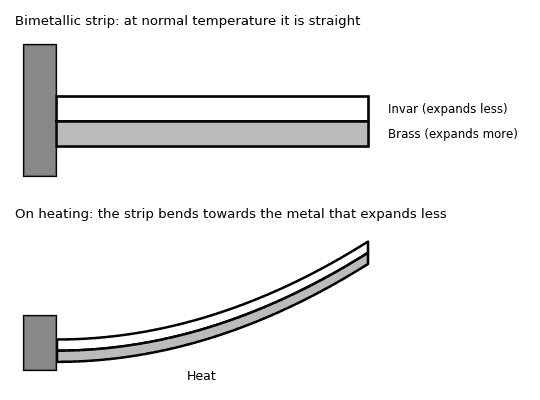 Fig. 1: Bending of a bimetallic strip on heating
Diagram in words: The upper picture shows a strip fixed at one end to a wall. The top layer is invar (expands less) and the bottom layer is brass (expands more). The strip is straight. In the lower picture the strip has been heated. The brass has grown longer, so the strip curves upwards towards the invar side.
7. Applications of Bimetals
- Thermostats: in electric irons, heaters, geysers, refrigerators and ovens, to keep temperature steady.
- Thermal overload relays: in motor starters, the heat of the overload current bends the strip and trips the contactor.
- Circuit breakers (MCB): the thermal trip works on a bimetallic strip.
- Flashers: in vehicle indicators and decoration lamps, making the lamp blink.
- Fire alarms and dial thermometers.
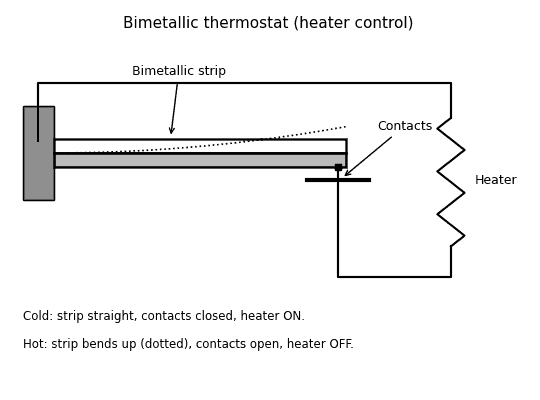 Fig. 2: Bimetallic thermostat controlling a heater
Diagram in words: A bimetallic strip fixed at the left carries a contact at its free end. This contact rests on a fixed contact, and both are in series with a heater. While it is cold, the contacts touch and the heater is on. When the heater warms the strip, it bends upwards (dotted line), the contacts separate and the heater switches off. When it cools, the strip returns and the heater switches on again.
Exam tip: "Write a short note on bi-metals and its applications" has been asked as a 4-mark short question.
C. FUSES
8. What Is a Fuse?
Definition: A fuse is a protective device that contains a thin wire or strip, called the fuse element. When the current exceeds a safe value (overload or short circuit), the element becomes hot, melts and opens the circuit.
Principle: heating effect of current (I2R).
Terms:
- Rated current: the largest current the fuse can carry continuously without melting.
- Fusing current: the minimum current at which the fuse element melts. It is always more than the rated current.
9. Properties of a Good Fuse Wire (Fuse Element)
- Low melting point, so that it melts quickly at the fusing current. (A previous paper asked: "A fuse is a thin wire of material having high melting point (True/False)". The answer is False.)
- Low resistance (high conductivity), so that it does not waste power or get hot at normal current.
- Free from deterioration: it should not oxidise or change its value with time.
- Low cost.
- Predictable behaviour: it should melt at the same current each time.
- It should not give off harmful fumes or spatter hot metal when it melts.
10. Fuse Element Materials
| Material | Approximate melting point | Use |
|---|---|---|
| Tin-lead alloy | About 190–250 °C | Low-current rewirable fuses |
| Tin, lead, zinc | 232, 327 and 420 °C | Low-current fuses, alone or as alloys |
| Copper | About 1085 °C | Higher-current fuses (with a short narrow link) |
| Silver | About 960 °C | Cartridge and HRC fuses (accurate, does not oxidise) |
Note: These are textbook values and are not given in the syllabus.
11. Cartridge Fuse
In a cartridge fuse, the element is sealed inside a tube. This protects the element and holds the arc inside when it melts.
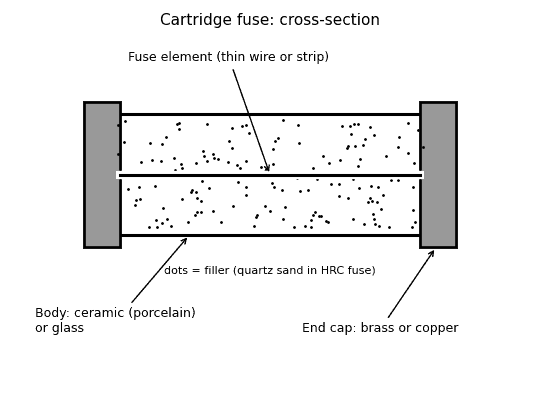 Fig. 3: Cross-section of a cartridge fuse
Diagram in words: A tube-shaped body has a metal cap at each end. A thin straight fuse element runs inside the tube from one end cap to the other. In an HRC fuse the space around the element is filled with fine quartz sand, which is shown by dots.
Materials:
- Body: ceramic (porcelain) for higher ratings and HRC fuses, or glass for low-current fuses. Both are good insulators and stand heat.
- End caps (terminals): brass or copper.
- Element: silver, copper or tin-lead alloy.
- Filler (in HRC fuses): quartz sand, which cools and quenches the arc.
Exam tip: A previous paper asked "Body of the cartridge fuse is made up of ___". Write ceramic (porcelain), and mention glass for low-rating fuses.
12. Advantages and Limitations of Fuses
| Advantages | Limitations |
|---|---|
| Cheap, simple and needs no maintenance | Must be replaced or rewired after it blows |
| Works very fast for short circuits | Slow for small overloads |
| Small in size | Wrong wire (too thick) may be used and defeat the protection |
Everyday Examples to Remember
- The silver joints on the back of a circuit board: solder.
- The thermostat knob of an electric iron or geyser: bimetallic strip.
- The glass tube fuse inside a plug or a car: cartridge fuse.
MCQ and True/False Facts
- Solder is an alloy of tin and lead.
- A fuse wire has a low melting point. The statement "high melting point" is False.
- The body of a cartridge fuse is made of ceramic (porcelain) or glass.
- A bimetallic strip bends because its two metals expand by different amounts.
- Rosin flux is used for electrical soldering. Acid flux is not.
Important Questions for Examinations
Short Answer Questions
- Explain the process of soldering and the properties of materials used as solder.
- What is flux? Differentiate between soft solder and hard solder.
- Write a short note on bi-metals and its applications.
- Discuss fuse and the important properties of a fuse wire.
- Name the fuse element materials. Describe the construction and materials of a cartridge fuse.
Long Answer Question
- Explain solder, bimetallic strip and fuse with their materials, properties and applications.
Quick Revision
- Solder = tin + lead alloy with low melting point (about 183–190 °C). Flux removes oxide.
- Steps: clean, heat iron, flux, heat joint, add solder, let cool.
- Bimetal: two metals with different expansion; bends on heating towards the metal that expands less. Used in thermostats and overload relays.
- Fuse: thin element that melts on overload. Low melting point, low resistance.
- Cartridge fuse: ceramic or glass body, brass caps, silver or copper element, sand filler in HRC fuses.
Related Topics to Study Next
Before this note: High Resistivity Materials (tin-lead alloy); Thermocouples. Next: Materials Used in the Fabrication of a Transformer; Materials Used in the Fabrication of Motors and Generators.
Conclusion
Solder is a low-melting tin-lead alloy used with flux to make good joints. A bimetallic strip changes the heat of a circuit into movement and controls heaters and motor protection. A fuse sacrifices a thin low-melting element to save the rest of the circuit. Each is simple, cheap and used every day.
More notes in Electrical Engineering Materials
- Hard Magnetic Materials: Tungsten Steel, Chromium Steel, Cobalt Steel, Alnico and Hard Ferrites
- Materials Used in the Fabrication of Motors and Generators: Part-wise Materials and Reasons
- Materials Used in the Fabrication of a Transformer: Part-wise Materials and Reasons
- Thermocouples: Principle, Working, Materials and Applications
- High Resistivity Materials: Constantan, Nichrome, Manganin, Tungsten, Carbon and Others
- Soft Magnetic Materials: Silicon Steel, C.R.G.O., Nickel-Iron, Mu Metal and Soft Ferrites
Comments (0)
Sign in or create an account to leave a comment.
No comments yet.